


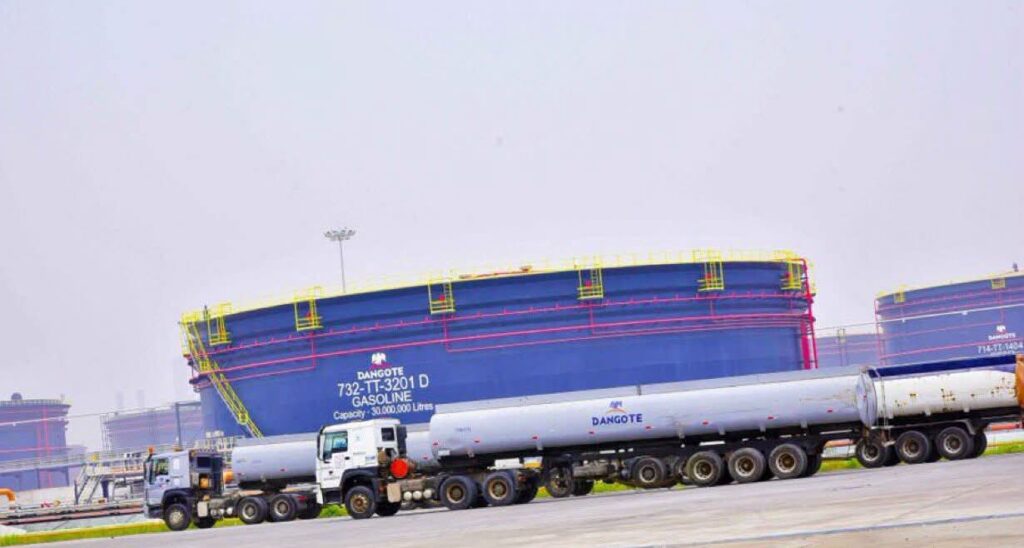
Dangote Petroleum Refinery is reportedly set to stop supplying Premium Motor Spirit, PMS, popularly known as petrol, to major oil marketers that hold valid licences to import the product into Nigeria.
Industry sources said the move is aimed at discouraging continued petrol imports at a time when local refining capacity is expanding, particularly with increased production from the Dangote Refinery.
According to figures cited by the refinery, imported PMS accounted for about 43 per cent of Nigeria’s total petrol supply in July, a development Dangote believes is reducing the market available to locally refined products.
Sources said the refinery would now prioritise the supply of petrol to marketers that do not hold import licences, while companies that continue to import PMS under the Federal Government’s approved regime may no longer receive supplies from the refinery.
The Nigerian Midstream and Downstream Petroleum Regulatory Authority, NMDPRA had issued PMS import licences to six companies in May.
The companies are Matrix Energy, A.A. Rano, AYM Shafa, NIPCO, Pinnacle Oil and Gas, and Bono Energy..
The licences reportedly cover a combined allocation of 720,000 metric tonnes of petrol, with individual allocations ranging between 60,000 and 150,000 tonnes.
Dangote Refinery’s decision is also said to be influenced by concerns over the quality of imported petrol.
Sources familiar with the matter said the refinery is worried that imported products of uncertain quality could be blended with locally refined PMS before reaching filling stations. Such a situation, they argued, could make it difficult for consumers and regulators to distinguish Dangote’s petrol from imported products and potentially damage the refinery’s reputation in the event of quality-related complaints.
The refinery is also said to have raised concerns about whether the NMDPRA has sufficient laboratory capacity to adequately test and monitor the quality of imported petrol.
The reported decision represents a stronger position by Dangote in its long-running opposition to continued fuel imports into Nigeria.
The company has repeatedly argued that sustained importation could undermine investments in domestic refining and has previously warned that it may export more of its refined products if large volumes of locally produced PMS remain unsold.
If implemented, the decision could create a split in the country’s petrol supply chain, with Dangote Refinery supplying marketers that do not import fuel, while licensed importers rely more heavily on cargoes sourced from abroad.
Industry observers say the development could affect fuel availability at depots, demand for imported cargoes and, potentially, petrol prices across different parts of the country.
While the Federal Government issued import licences to ensure adequate fuel supply and promote competition, Dangote Refinery maintains that continued imports could undermine Nigeria’s growing investment in local refining.